Tuesday, October 11, 2011

The Scheveningen district of the Hague still retains a few abandoned WW 2 German defense bunkers, part of the Nazi "Atlantic Wall."  Nearby is a marker where 300 members of the Dutch resistance were shot by the Nazis.

It's sobering to stand here on the beach and try to imagine what it must have been like to be invaded and occupied by the Nazis.

Nazi Germany invaded the Netherlands on May 10, 1940. Four days later the Luftwaffe bombed Rotterdam. The bombing destroyed much of Rotterdam's medieval city center, leaving almost 80,000 people homeless. In response to the German threats to destroy other Dutch cites, one by one, the Netherlands - which lacked air defenses - surrendered a few days later.  The Nazis stayed from 1940 to 1945.


 Rotterdam after the German bombing, spring 1940.


After seeing all the cute Dutch girls riding on their bicycles wearing skirts and scarves while carrying their groceries and babies and talking on their iPhones, I thought I should give a bicycle a try (sans skirt).   Den Haag is flat, so it's a great way to get around and best of all I have no worries about parking.
I call her "Willie."

Saturday, October 8, 2011

Our neighborhood

This is a typical home in the district of the Hague where we live, called "Statenkwartier."


Statenkwartier is a traditional upscale residential area of The Hague.  The older homes around here were built circa 1903-1915, in brick and tile, in the Art Nouveau style.  The neighborhood architecture is rich in variation and full of details, with ornamented woodwork, stained glass windows and carved stone exterior decoration. Here are a few more shots of our Statenkwartier neighborhood.


Visit to Jan Vermeer's hometown of Delft.

Jan Vermeer is one of the best known painters of the Dutch Golden Age, the 17th and 18th centuries.  You are probably familiar with his 1666 painting, Girl with a Pearl Earring.


Vermeer's name is forever linked with the Delft, the city where he was born in 1632, and where he lived and worked all his life.  The Vermeer Center in his hometown of Delft is housed on the historic site of the former St. Lucas Guild where Vermeer was dean of the painters guild for many years.

Views of Delft:
Above views are of the Oude Kerk (Old Church) tower above the old city center of Delft. The year 1246 is the church's official founding date, but its history goes back even further.  For hundreds of years before that date the inhabitants of the settlement along ‘de Delf’ held church services on the same spot. There was a wooden church on the site as early as 1050, but the sagging brick tower in the two views above was completed in 1325. Both Vermeer and van Leeuwenhoek (more about him later) are entombed in the Oude Kerk.


a guild house, 1627
(below)  warehouse, 1692


The spire seen over the rooftops belongs to Delft's Nieuwe Kerk (New Church).  Exactly one hundred years after construction began, the tower was finished on 6 September 1496.


Delft's canals are still very much in use.


Delft, as painted by resident Johannes Vermeer in 1661.


Delft Staadhuis (city hall) built in 1618, around the tower of an earlier staadhuis, dating from 1300. 
The clock is a "recent" addition, installed in 1536.


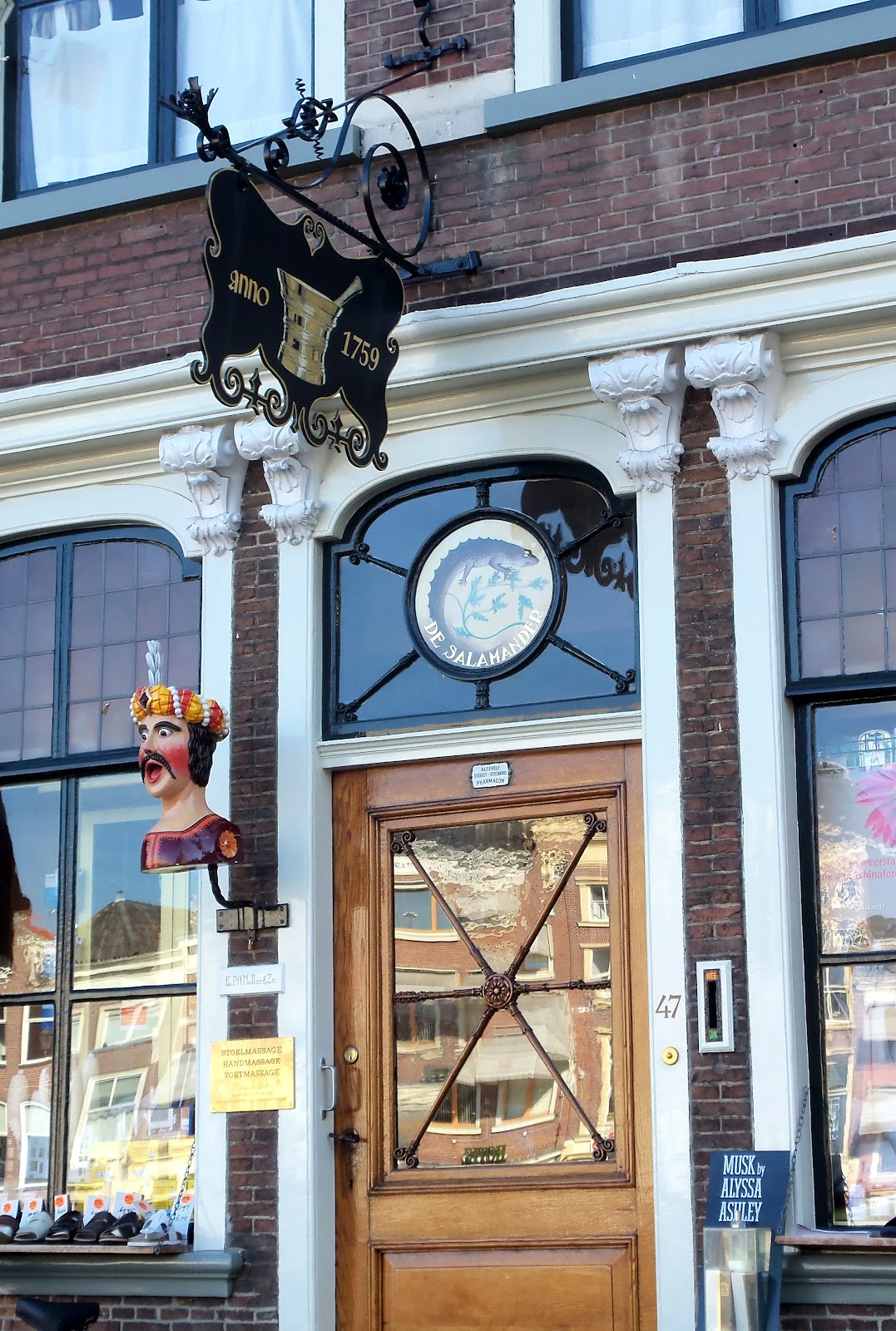
canal-side shop doors

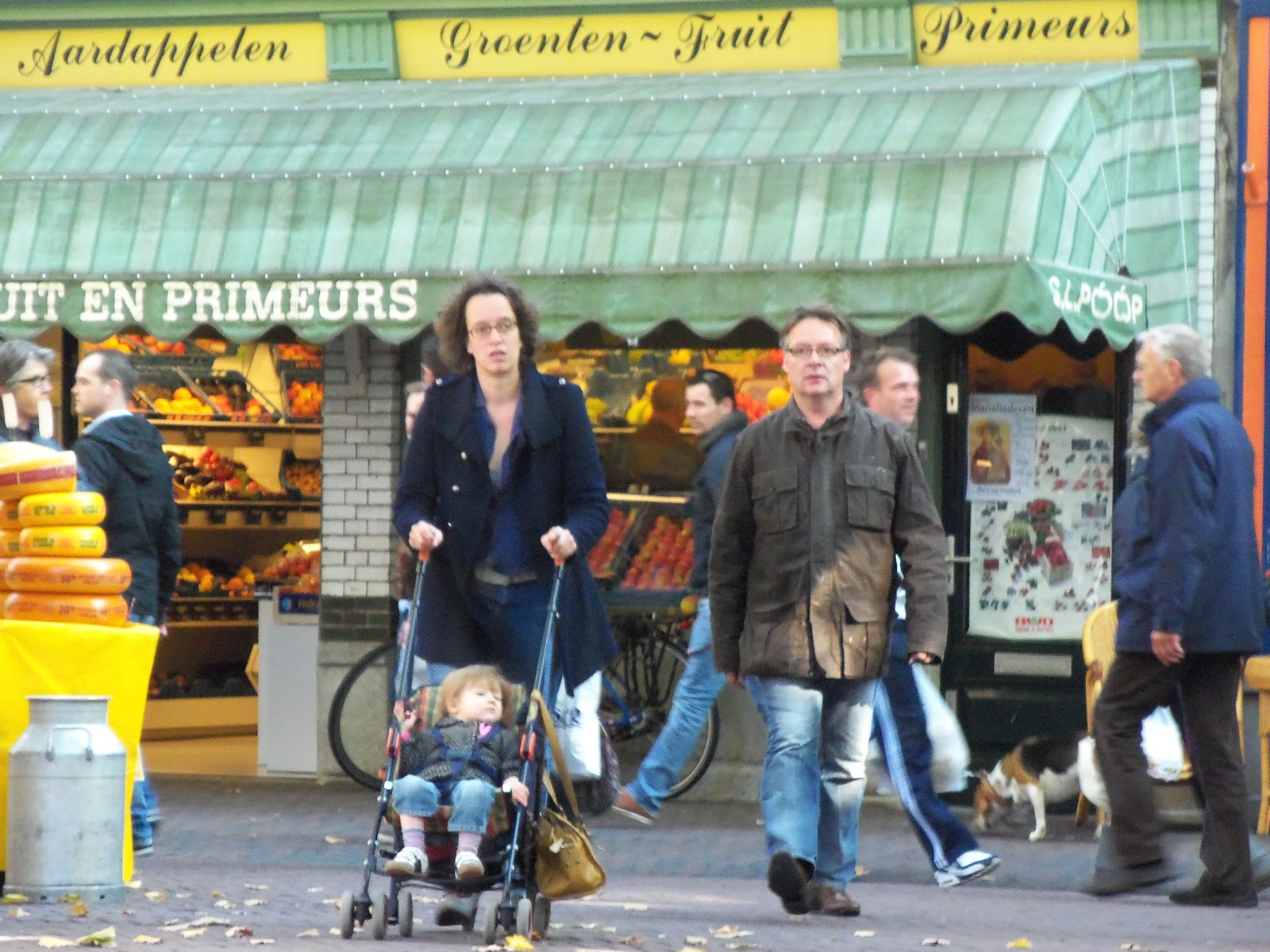
Businesses on the Delft Markt


"Girl With A Black Raincoat" (a.k.a. "Linnea in Delft")  posed in a reconstruction of Vermeer's atelier.

The Oude Kerk in Delft is the burial place of Anthonie van Leeuwenhoek, inventor of the microscope. He was born and raised in Delft;  in fact, van Leeuwenhoek's birth on 24 October 1632 is listed on the same page of the city register as another of Delft's famous sons, Johannes Vermeer.


Van Leeuwenhoek made more than 500 optical lenses to build at least 25 microscopes, of which only nine originals survive today. His technique for making lenses remained his secret until it was rediscovered in 1957.


Van Leeuwenhoek used his tiny microscopes to observe and describe the things he viewed; cell structures, muscle fibers, spermatozoa (the church gave him trouble on that), and what he called "little animals;" bacteria, protozoa and yeast.  You might say he's the father of microbiology. You would be right.


In 1981 a British microscopist discovered Van Leeuwenhoek's original specimens among the collections of the Royal Society of London. They were declared to be of high quality and  preserved well enough for updated studies.


Some snapshots of Delft:


Monday, October 3, 2011

Did I mention bicycles?

A bicycle parking lot, Den Haag.


Arrival

After what seemed like an endless flight (9 hours of turbulence between Seattle and Amsterdam) while stuffed in accommodations the size of a baby car seat (with about three centimeters of legroom), we arrived at Amsterdam Schiphol airport on 30 October at around 09:00.


The food aboard our KLM Royal Dutch flight was great.  Linnea ordered for me a vegetarian meal.  I was served a well-prepared favorite north Indian dish, Baingan Bharta, with paneer mixed in and a side dish of Bashmati rice.   Unfortunately, it came with a sticky inner sole-sized slab of moist cardboard pretending to be naan.

Really nice city, the Hague.  

We live in a tiny two-story converted 19th century carriage house located in the upscale Staatenkwartier district near Scheveningen beach. (see us on Google Earth by typing in the address: Frankenslag 16, 2582 HR, Den Haag, Netherlands). 

                                                                                        Our House

Right off I noticed lots of very tall, very blond, very fair blue-eyed and healthy-looking Dutch women, all on bicycles. They are everywhere, some even peddling around in skirts and heels, others riding while texting on cell phones. And that takes talent. 

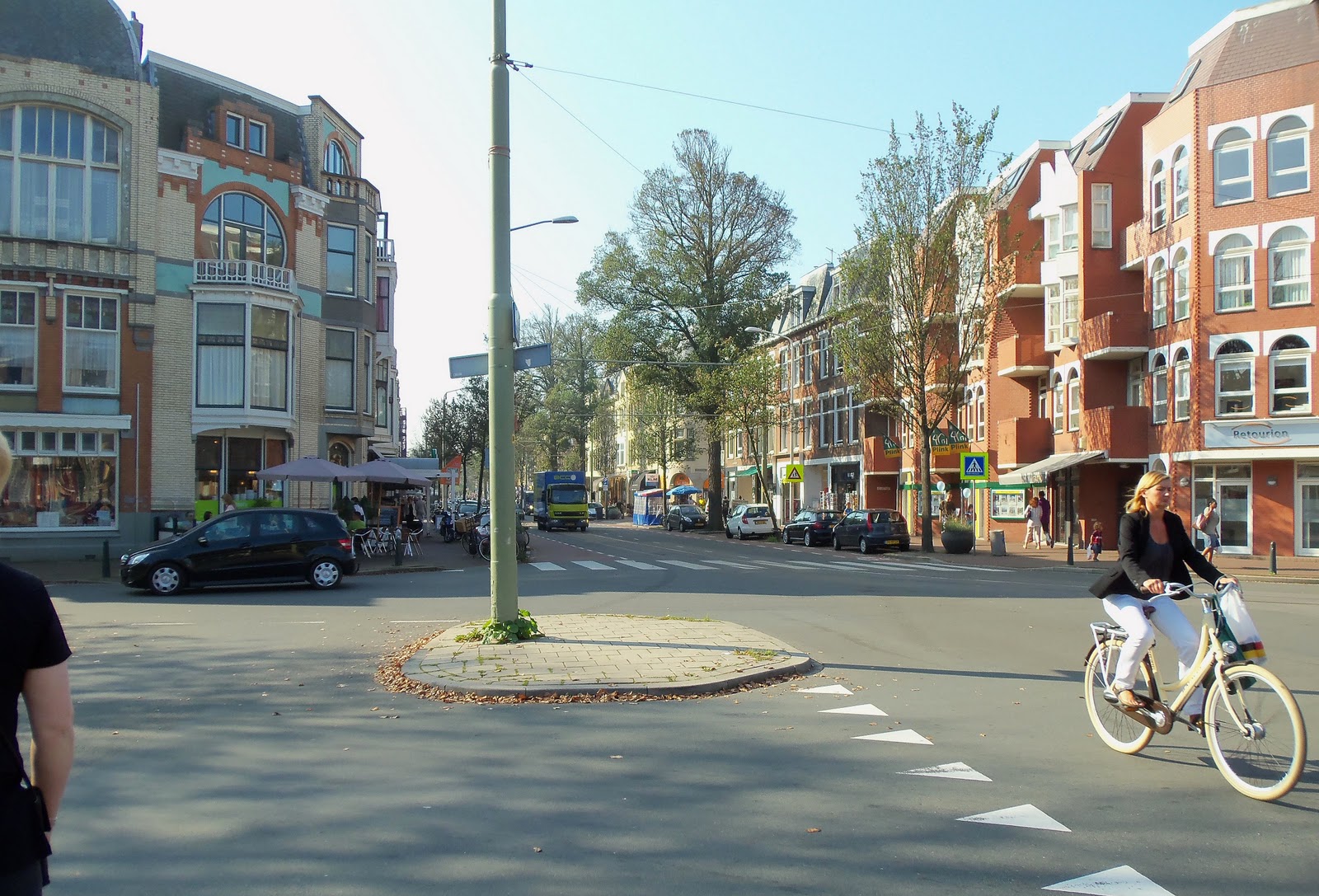
We're living a ten minute walk from our neighborhood shopping street, Frederick Hendricklaan, which locals simply call "The Fred".  The whole area for blocks around is filled with beautiful old art nouveau brick homes and small family-run shops and groceries.  Besides the bicycles, there are electric trolleys everywhere.

                                                                                       "The Fred"


There's an amazingly diverse population in the Hague.  It seems to be composed of Africans, Indonesians, the Dutch, East Indians, Americans, Brits, Germans and unclassifiable swarthy folks who look like me. :-D


Wednesday, September 21, 2011

See that tall, light-colored, curvy building in the rear of the photo?  That's the International Criminal Court in the Hague.  Below is a closer view of the ICC.